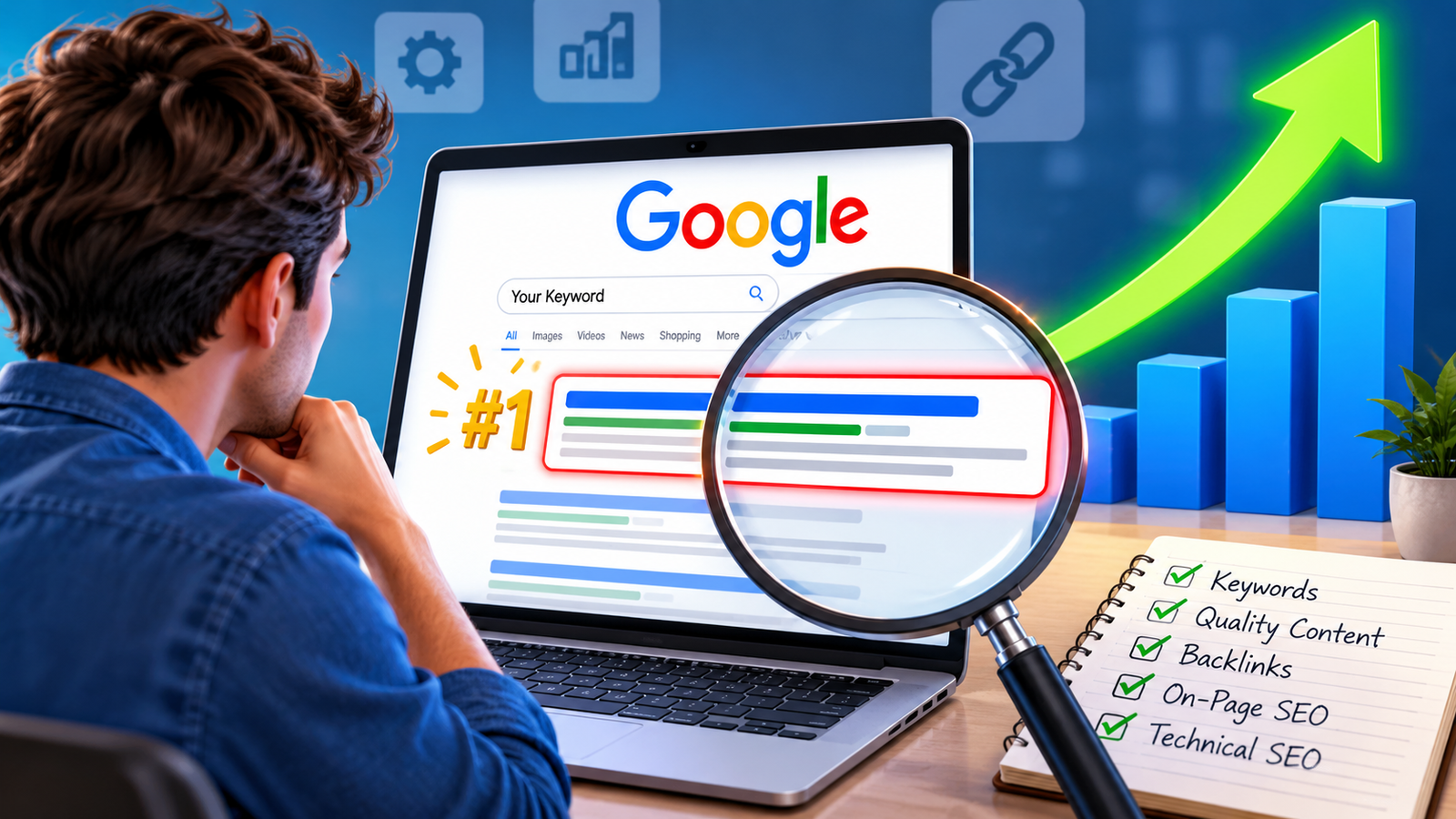
Getting a higher ranking in Google is a way to increase your traffic free of charge, find potential customers, and improve your performance on the internet. However, having a good ranking requires more than just using the important keywords on your website. You have to have a well-developed SEO strategy that includes creating high-quality content, taking into account the users’ intention, making sure that the website works correctly, and having backlinks, as well as a good level of user experience.
Whether you are working on a small business website or an online store, the right methods will enable you to optimize search engines and get the interest of your users.
In this article you will find 15 practical tips on how to improve your ranking in Google.
Think of Google as a digital librarian
Think of Google as a librarian. A librarian has to organize a massive number of web pages. Whenever someone wants to find something, Google provides as many relevant answers as possible.
Google knows whether a website is useful or not by looking at some indicators, such as what the web page is about, how good the web page works, and how reputable the website is. The main thing is to make sure that your website provides the answers to your visitors.
When it comes to search engines, don’t fret over the SEO aspects of your website.
What Are Google Ranking Factors?
Google employs a number of criteria for assessing which pages will be displayed in search queries. While it cannot be guaranteed that the application of each one of these criteria will automatically ensure high rankings. However, there are several important factors in SEO that should be taken into account.
Among the most important factors, in particular, are the quality of the content, relevance of keywords used, search intent behind the query, backlinks, technical aspects of website functionality, mobile usability, internal links, and usability.
The best approach to tackling all factors and techniques is to make improvements to all of them simultaneously instead of focusing only on one of them.
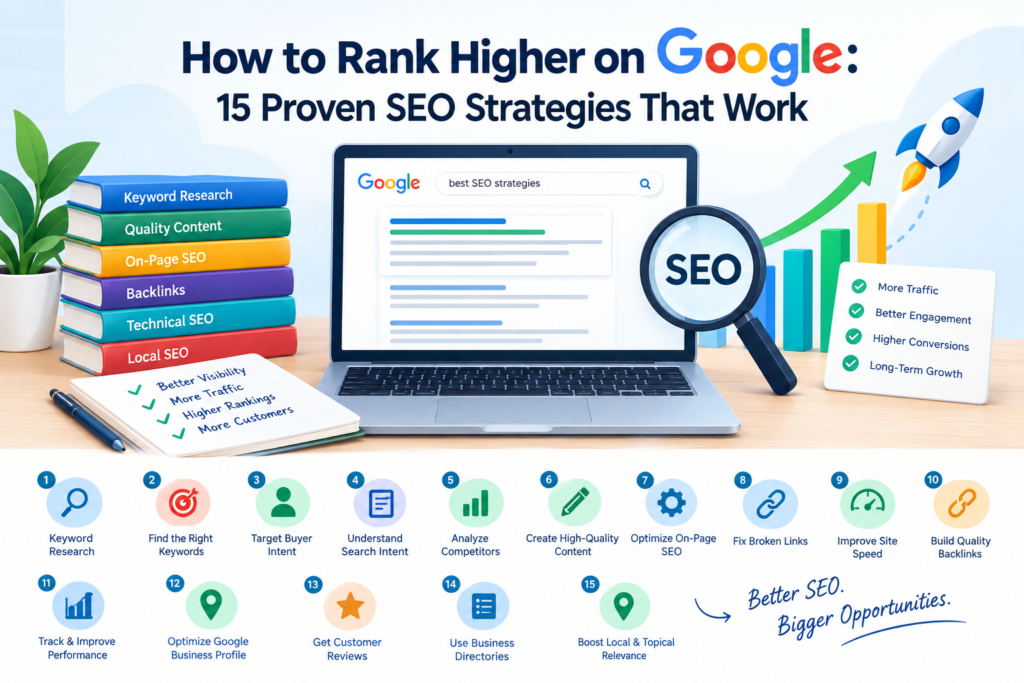
How to Rank Higher on Google: 15 Proven Steps
Understand Keyword Basics
In the world of marketing, a keyword is defined as any word or phrase that is typed into a search engine by users looking for a specific service or product. Therefore, comprehending the keyword meaning gives marketers a chance to make content that is relevant for their audience.
There are a few types of keywords: main, additional, long-tail, local, informational, and commercial keywords.
For instance, if someone is searching for “what is SEO,” it means that person wants to understand what SEO is about. If a user is exploring “SEO for small business,” it means that he/she is looking for a good company to hire.
Utilizing keywords in titles, headings, URLs, and texts is recommended while straying away from content keyword stuffing.
Choose Keywords With Realistic Competition
Highly competitive keywords can be difficult to rank for, particularly when your website is new. Start by finding relevant search terms that offer realistic opportunities.
Look for keywords with reasonable search demand, manageable competition, clear intent, and a strong connection to your services or content.
Long-tail keywords are especially useful because they target specific searches. For example, “SEO tips for local restaurants” is more specific than “SEO tips.” Targeting these detailed phrases can help you reach a more relevant audience.
Target Keywords With Buyer Intent
When searching for a subject, there are certain key phrases that catch the attention of people, including other phrases that have consumers looking to spend some money.
Informational searches are aimed at providing learning for consumers, whereas commercial or transactional searches are performed with a higher level of willingness to buy.
If you work in the digital marketing services industry, you better choose phrases like “hire SEO services” or “SEO agencies for small businesses” to attract your possible customers.
Match Your Content to Search Intent
Search intent is the concept of knowing what a person wants to achieve through specific keywords. It is very important to know about search intent to create the content that is good for your purposes. There are four types of search intent we can come across in the web search: informative intent, navigational intent, commercial intent, and transactional intent.
When you produce good content, you will be able to find out which type of content is at the top of search results. In other words, say in case how-to content gets on the first page of search results, then you can produce how-to content. In case the majority of the content is comparative, then you can use this search pattern to create good comparative content.
Having analyzed the search intent, you make your content more appropriate for the reader and therefore raise your relevance.
Analyze Competitors
Competitor analysis can help one to understand what the customers are interested in. One may want to browse through popular websites and analyze what content they have.
Create Helpful, High-Quality Content
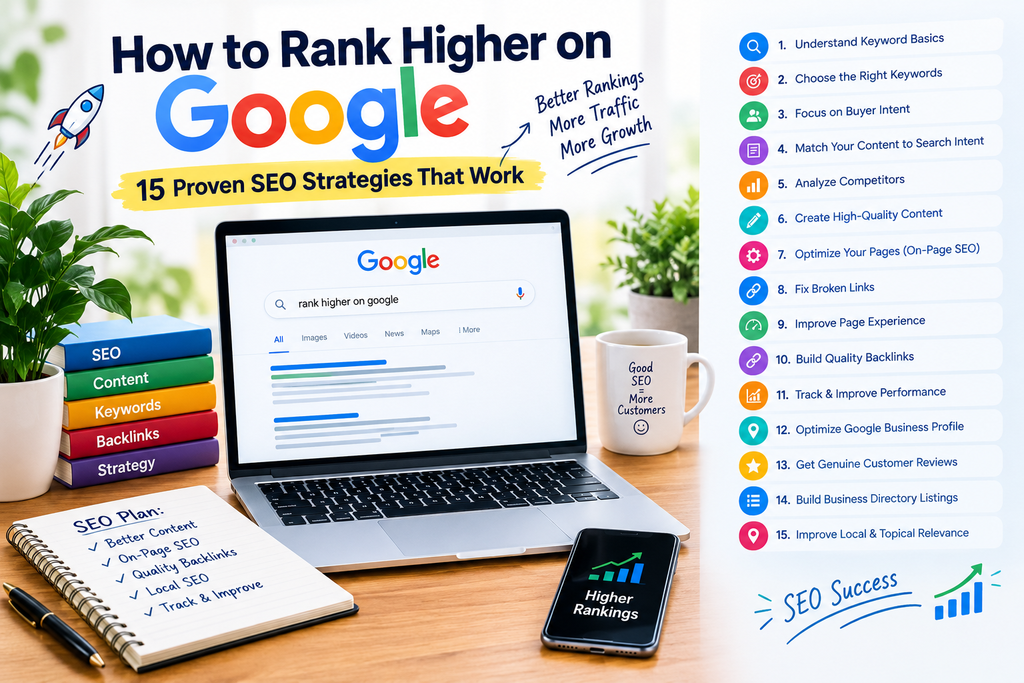
Creating useful material is critical to winning over the readers’ trust and credibility of the website.
Your articles should answer the question correctly, explain difficult stuff easily, and provide good recommendations. Employ headings of the sections that tell what the section is about, use short paragraphs, and add illustrations.
If the subject requires regular updates, keep the info updated. Don’t make the length of the material longer with unnecessary elaboration. Each part of the text should facilitate the understanding of the subject and provide a means of moving forward.
Optimize Your Pages With On-Page SEO
One significant aspect of on-page optimization is providing adequate information to the search engine. The primary stage is about creating an appropriately formatted title tag with the primary keyword.
A single title (H1) has to be there together with subheadings. URLs also have to be short and user-friendly. Make sure that the meta description resembles the catchy one. It is equally important to create ALT texts and optimize pages.
Be careful using the keywords.
Find and Fix Broken Links
Whenever a user clicks on dead links, they will usually be taken to pages that no longer exist or are unreachable. Thus, dead links can create a lot of problems in terms of navigation.
It is essential to check your website regularly for broken internal links, inaccessible external links, redirection errors, missing pages, void pages, and bad images.
Be sure to repair or redirect all dead links as well as to update them accordingly. Websites with working links provide a great user experience and allow search engines to index their content successfully.
Improve Website and Page Experience
Website customers wish it would be a fast one that runs well on their devices. If it takes too long for a page to appear, if it turns out to be too intricate, or if different pop-ups ruin the pleasure of surfing the web, then it will be hard for users to find what they are searching for.
Performance of websites can be enhanced thanks to image compression, decreasing the weight of files, ensuring quality web hosting, and checking whether the website is mobile-friendly or not.
PageSpeed metrics, which are offered by Google, can help figure out website performance problems to increase page speed and customers’ experience.
Last but not least comes building good-quality backlinks.
Backlinks are hyperlinks located on other websites directed to a user’s web pages. The more quality links lead to a user’s web page, the more valuable it seems.
In order to get backlinks, the user can make original studies/research, create valuable resources, write expert articles, build good relations, and gain mentions via digital PR.
Track SEO Performance and Make Improvements
Search engine optimization is a continuous procedure that has to be constantly supervised. Track the number of impressions, clicks, click-through rates, and performance of keywords using Google Search Console. Google Analytics shows how many visitors come to the website and how they behave there.
Look for the pages that have lots of impressions but few clicks, the articles that are no longer getting traffic, and the landing pages that bring people but do not get conversions.
Then refresh the old content, improve the page titles, strengthen your internal linking structure, and expand the content whenever possible. Make use of the performance reports for your next steps in optimization of the site.
Local SEO Tips for Small Businesses
Local SEO helps businesses connect with customers searching for products or services in a particular area. It is especially useful for service providers, shops, restaurants, and other businesses that serve specific locations.
Optimize Your Google Business Profile
With a fully optimized Google Business Profile, you can improve the chances of your business being discovered by Google users.
Make sure that your business information is correct and complete, which means that you need to enter your phone number, business name, location, website, type of your business, working hours, and types of services that you provide and upload a sufficient number of photos of your business.
Choose the right type of your business and be available for your customers—please try to provide answers to all the questions they may have.
Encourage Customers to Write Genuine Reviews
Reviews of customers matter a lot when potential customers estimate local businesses. So you should motivate your satisfied clients to write authentic reviews.
Make sure that you respond to both negative and positive reviews as professionally as possible. Thank your clients for their honest reviews.
Keep in mind that you must never buy fake reviews or ask your customers to provide you with false reviews.
Build Consistent Business Directory Listings
Business directories and local citations can help people discover your company and verify its contact information.
List your business on relevant, trustworthy directories and industry platforms. Keep your business name, address, phone number, and website consistent wherever possible.
Avoid submitting your website to large numbers of irrelevant directories simply to build links. Prioritize reputable platforms that your customers might actually use.
Strengthen Your Website’s Topical and Local Relevance
Make sure to create a website that explains your business’s role. It should also define your clientele and the ways it solves customer problems.
Make sure to create proper dedicated pages for your core services and the areas of your work providing real value for customers. Each page will contain pertinent information about the service, the questions that might arise among the visitors, the description of the service in detail, and how they can get in touch with you.
Don’t go for too many almost identical location pages without much distinctive content.
Frequently Asked Questions About Google Rankings
What should I do to reach the first spot on Google?
There’s no guaranteed way but creating engaging content, using relevant keywords, and understanding search intent is necessary along with technical SEO, link building, and continuous improvement.
Can I request Google to improve my rank position?
Google Ads can be used to ensure visibility, but it won’t guarantee improved ranks in organic search results. SEO and paid ads are two different concepts.
Can I do SEO free of charge?
Absolutely, because there are free solutions like Google Search Console, Google Analytics, and Google Business Profile. Paid software might help with deeper analysis and reports.
How to improve my listing on Google Maps?
You should have an up-to-date business profile, gain authentic reviews from clients, keep your contact information consistent, and develop your website content locally.
How to start improving SEO easily?
Take an existing page that generates impressions but no clicks, and then optimize its title, text, headings, and internal links, and observe results.
Final Thoughts
Getting a better position in Google requires doing a lot of things rather than performing only one action.
Keyword research and choosing keywords that meet users’ needs, developing quality content, website load speed improvement, obtaining trustworthy backlinks, and enhancing local SEO are essential to make it happen.
It is wise to start from the actions that provide maximum effect in terms of clients’ needs, evaluate their effectiveness, and keep optimizing. While the essential SEO work takes a lot of time, it pays off with time in the form of built awareness of the site and a steady flow of returning customers through the website.